
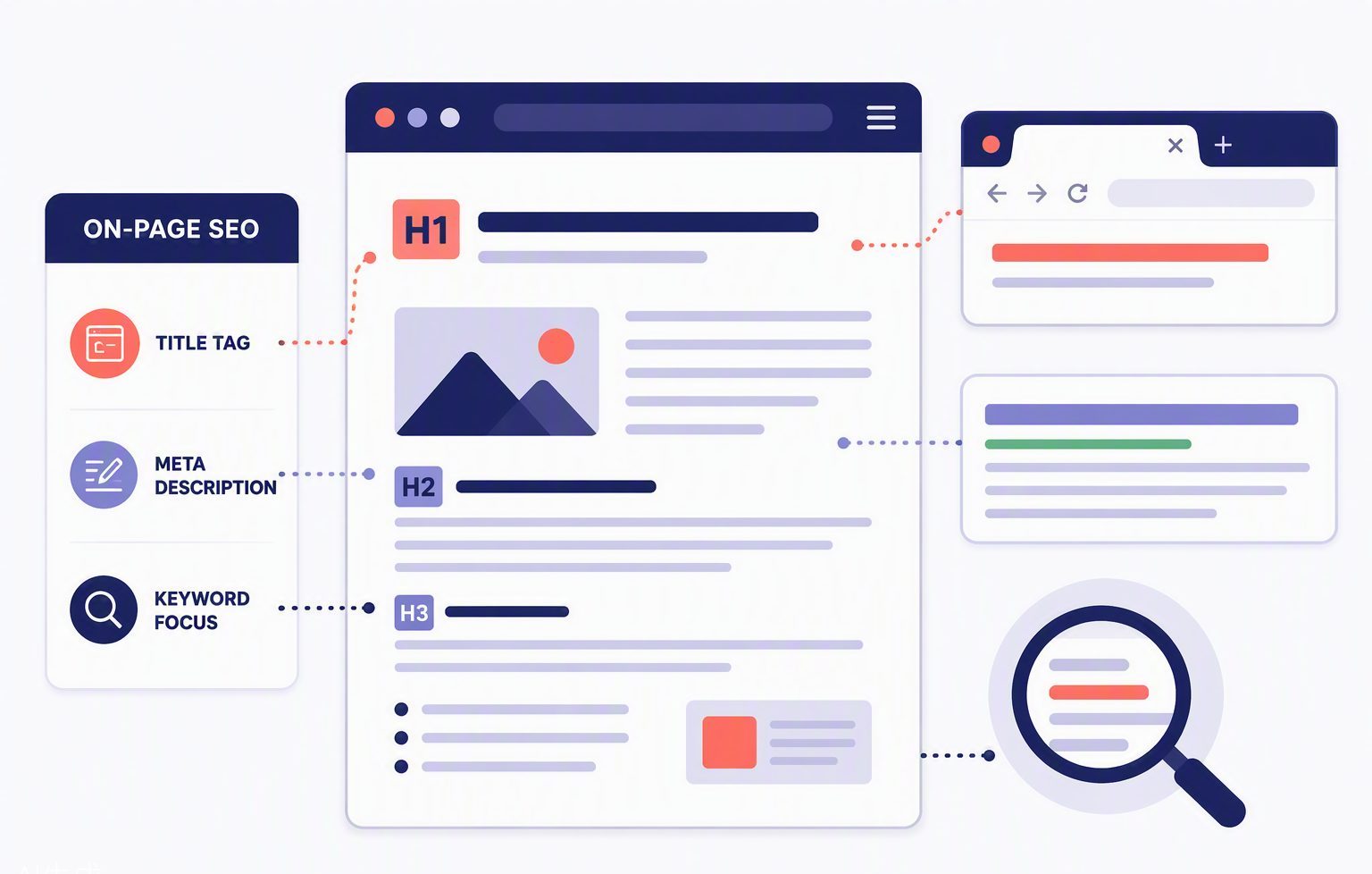
SEO structure for a website is the map you draw before you write or redesign. It answers three questions. Which pages exist? What is each one for? Which pages link to which? If you cannot answer those, more blog posts will not fix the site. They will add rooms to a building that still has no corridor.
You can draw the map on paper. You do not need a specialist tool. For a small UK business the map is usually one page. This is that exercise, and it is deliberately different from a general lecture on information architecture. The companion piece on service businesses is website structure for SEO when you sell a few services.
List the searches you are willing to serve
Write the phrases that should bring a customer, not every phrase a tool suggests. Include the obvious ones: the service plus the town, the service on its own if you work more widely, and the brand name. Include the questions people ask before they buy, but only the ones you can answer properly. This list is the demand. The structure has to give each important phrase a home.
If two phrases mean the same job, they share a page. If they mean different jobs, they need different pages. “Website design” and “SEO friendly website” might be one offer for your business or two. The map should say which, so you do not publish both and then wonder why they compete.
Give each home a name and a job
For every page, write the URL you want, the title you would be happy to see in Google, and one sentence that says who the page is for. If you cannot write the sentence, the page is not ready. A page with two sentences is a page that will be thin, duplicated, or abandoned.
Group them in layers only where it helps. Home links to services. Services link to contact and to a small number of guides. Guides link back to one service. About and contact sit beside the services, not underneath a blog. That is enough SEO structure for a website that is not a shop or a publisher.
Mark the links that are not optional
On the map, draw arrows you refuse to forget. Homepage to each service. Each service to contact. Each guide to its service. Each service to its most useful guide. Those arrows are the internal links you will put in the menu or in the text. A page with no arrow pointing at it should not be published.
This is where structure and linking are the same job. A beautiful sitemap diagram that nobody turns into real links does not change what Google or customers can walk. The habits for those arrows are in internal linking best practices.
Decide what you will not build
The map should also show the pages you are refusing. No town pages unless the content is different. No tag archives. No duplicate of the homepage called “welcome”. No blog category for a topic you will post in once. Writing these down stops a template from creating them for you. Many content systems invent URLs. An SEO structure includes a note that says those URLs stay out of the sitemap and, if the system insists on creating them, they are not linked and not indexed.
Also decide the host. Pick www or the bare domain and stick to it. Pick HTTPS. Pick whether blog URLs end in a slash. Consistency is part of the structure because inconsistency creates two versions of the same page.
Check the map against the live site
If the site already exists, compare the drawing with the URLs that are actually public. Extra URLs need a redirect or a reason to stay. Missing URLs need to be written, not just added to a menu as empty links. Titles that do not match the job you wrote down need a rewrite before you worry about more content.
Search Console is the reality check. If a query you assigned to a service page is showing the homepage, the map and the site disagree. Strengthen the service page and the links to it, or accept that the homepage is the page you are willing to rank and stop publishing a rival.
Keep the map where the next edit can see it
Put the list of URLs, titles and required links in a document the person who updates the site will open. When a new guide is proposed, the first question is which service it supports and which arrow you will add. If there is no arrow, the guide waits.
We build sites from this kind of map. The SEO friendly website design service starts with the pages and the links, then the layout. Send the phrases you want the site to be found for and the pages you already have. That is enough to draw the structure.